
How to Level Your Lawn: The Easy Topsoil Fix Every Homeowner Should Know
You don’t need to rip out your whole lawn to get rid of those ankle-twisting dips and mower-scalping bumps. The fix is a lot simpler (and cheaper) than most homeowners think: topdressing with good-quality topsoil.
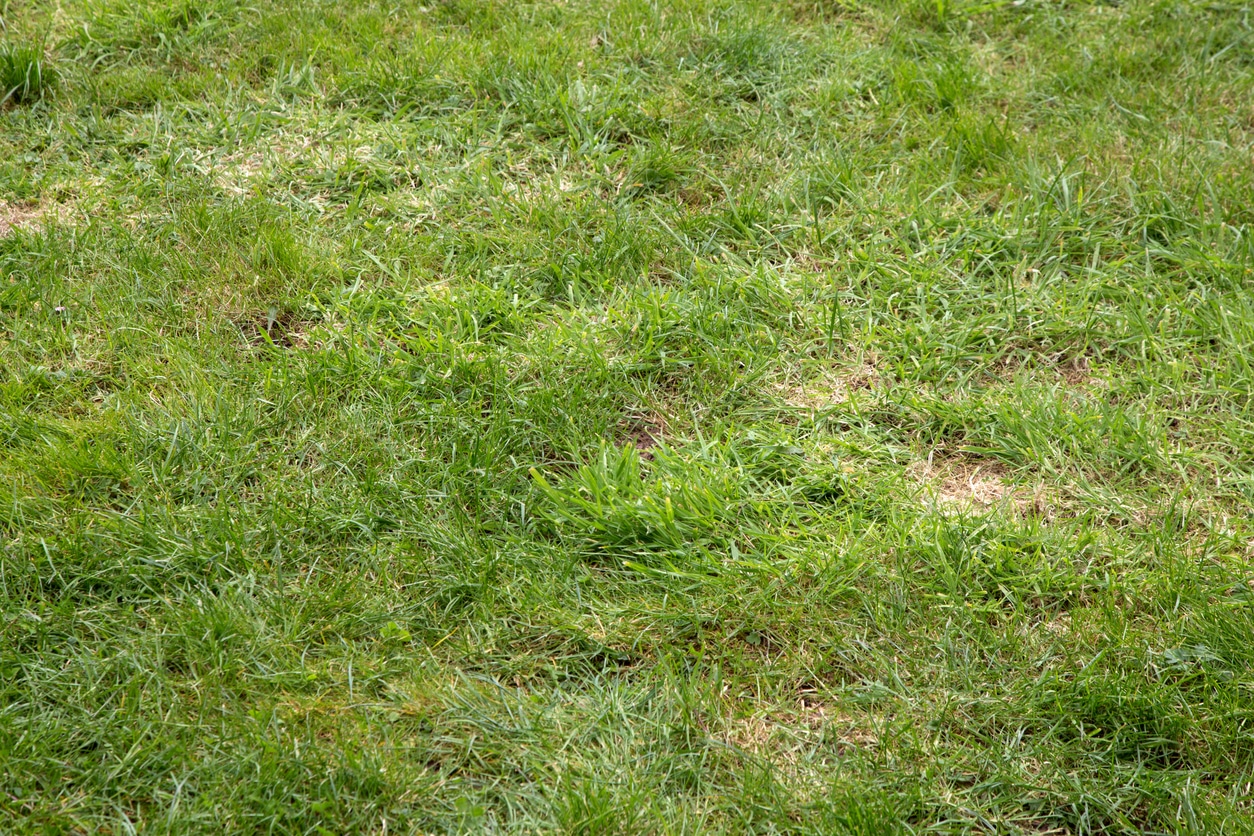
If mowing your yard feels like off-roading, you’re in good company. Lumpy lawns are one of the most common complaints we at South Dallas Turf & Supply hear from Birmingham-area homeowners. The good news? Learning how to level a bumpy lawn is totally doable on a weekend, with a wheelbarrow, a rake, and a little patience. So grab a cold drink and let’s get your lawn looking smooth again.
Why Lawns Get Bumpy in the First Place
Before you fix an uneven yard, it helps to know what caused it. The cause tells you whether a quick topdressing will do the trick or whether something bigger is going on underground.
Soil Settling Over Time
This is the most common culprit by far. Soil naturally compacts and settles, especially where something was buried or dug up: old tree stumps rotting away, utility trenches, irrigation lines, or spots where fill dirt wasn’t packed down well. The result is a gentle dip that slowly gets deeper year after year.
Tree Roots Pushing Up From Below
Large shade trees like oaks and maples send roots out far beyond their canopy. As those roots thicken, they lift the turf above them and create ridges that your mower blade loves to scalp. Topdressing can soften the transition, but you’ll want to be careful about piling soil deep over a tree’s root zone.
Poor Drainage and Soft Spots
If water sits in one part of your yard after every rain, that area stays soggy and squishy. Every time someone walks across it (or the dog does zoomies), the soil gets pushed around and dented. Over time, you end up with ruts, footprints, and low spots that hold even more water.
A Rushed Grading Job
New construction is notorious for this one. When a house is built, the final grade is sometimes done quickly with whatever soil is on hand. Clods, rocks, and loose fill settle unevenly in the first few years, leaving you with a yard that looks like a rumpled bedsheet.
A few other sneaky causes worth knowing:
- Critters: Moles, voles, and armadillos tunnel and dig, leaving raised runs and holes behind
- Freeze-thaw cycles: Our occasional hard freezes can heave soil upward, especially in clay
- Heavy traffic: Cars, trailers, or play equipment parked on the lawn compress the soil in patches
Why Topdressing is the Go-To Fix
Topdressing simply means spreading a thin layer of soil over your existing grass and letting the turf grow up through it. Do it a couple of times, and those low spots fill in while your lawn keeps right on living. It’s one of our favorite lawn care tips because it’s so affordable and forgiving.
Here’s why it beats tearing everything out:
- No starting over: You keep your established grass instead of paying for a full re-sod
- Budget-friendly: A few yards of soil costs a fraction of a lawn renovation
- Healthier soil: Quality topsoil adds organic matter that improves your lawn’s root zone
- DIY-friendly: No heavy equipment required, just basic tools and some elbow grease
The secret is using the right material. Good topsoil for lawn leveling should be screened, free of rocks and debris, and similar in texture to what’s already in your yard. Mixing wildly different soils can create layers that block water and roots. Our premium topsoil is a great fit for this job.
How to Level a Bumpy Lawn: Step-by-Step
Ready to roll up your sleeves? Here’s exactly how to tackle lumpy lawn repair with topsoil, from first look to final watering.
Step 1: Assess the Problem
Walk your yard slowly and look for dips, ridges, and soft spots. A long, straight board or a 2×4 laid across the grass is a great low-tech level. Any gap underneath tells you how deep the low spot is.
Sort what you find into two groups:
- Shallow dips (under about 1 inch): Perfect for topdressing right over the grass
- Deep holes (1 inch or more): These need a little surgery first (more on that in step 2)
Flag the problem areas with marking paint or small flags so you don’t lose track of them. Then measure the total area. Our lawn measurement tool makes it easy to figure out how much soil you’ll need.
Step 2: Prep the Lawn
Good prep makes the soil settle in evenly and gives your grass the best shot at growing through.
- Mow a little lower than usual, without scalping, so the soil can reach the base of the grass.
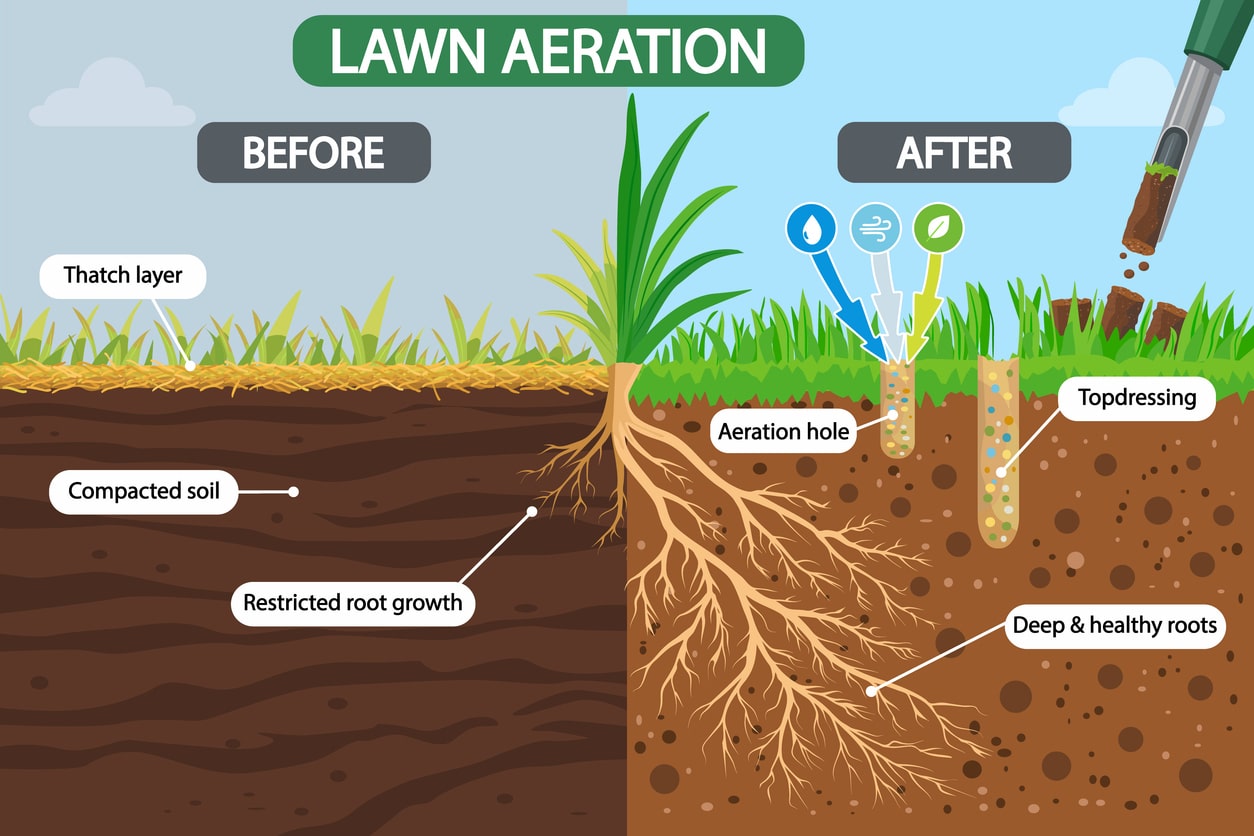
- Dethatch if needed. A thick mat of dead grass keeps soil from making contact with the ground.
- Core aerate compacted areas. The holes help new soil blend into the existing root zone.
- Handle deep spots first. Cut an “H” into the sod with a flat spade, peel the flaps back, fill underneath with topsoil, tamp it firm, and lay the sod back down.
Step 3: Apply and Spread the Topsoil
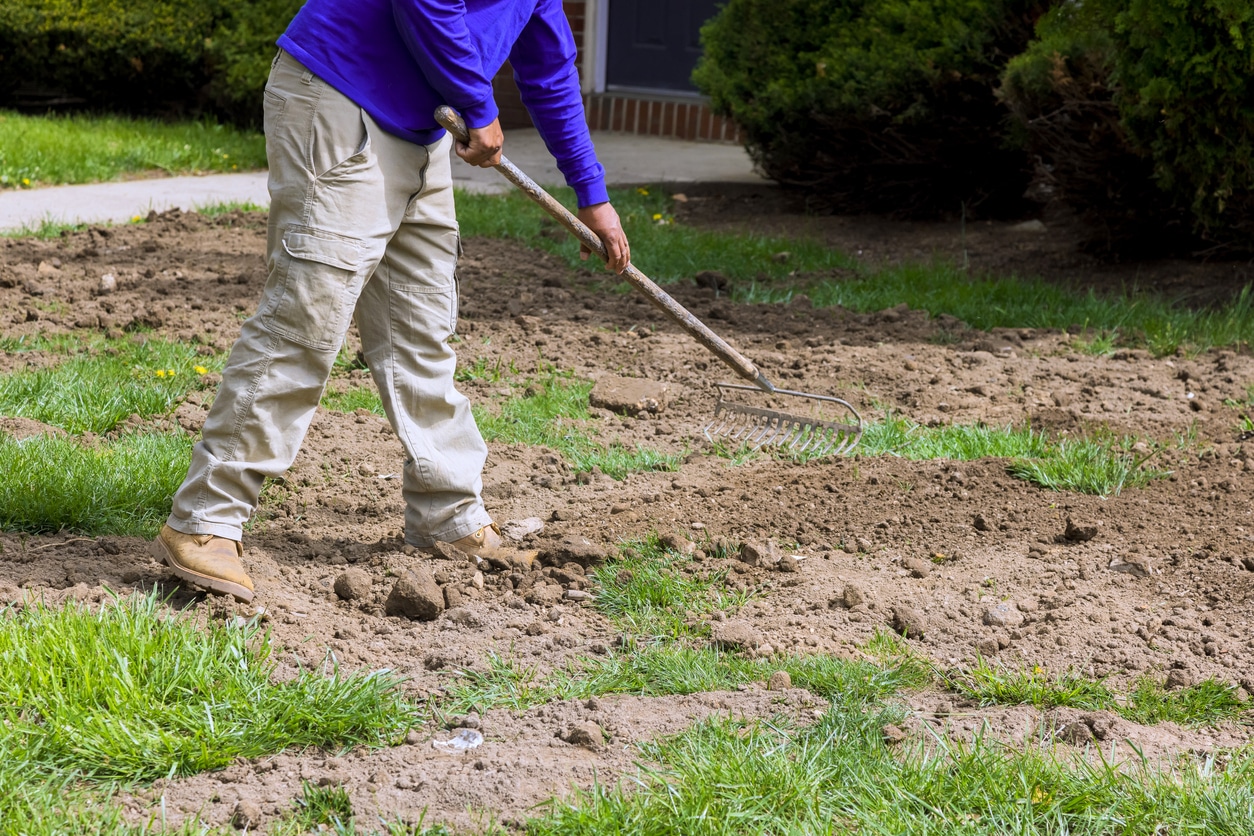
Shovel small piles of topsoil into the low spots, then spread them out with the back of a landscape rake or a leveling rake.
The golden rule: never bury your grass. Keep each application to about ¼ to ½ inch deep. You should still see the grass blades poking through when you’re done. Pile it on thicker, and you’ll smother the turf, which defeats the whole purpose.
A few pro tips for topdressing lawn with topsoil:
- Work the soil down into the canopy with a push broom or the flat side of your rake
- Feather the edges so each patch blends smoothly into the surrounding lawn
- Work in small sections so you can keep an eye on depth
Step 4: Water and Repeat
Water lightly right after spreading to help the soil settle around the grass. Then let the lawn grow through it, which usually takes two to four weeks during the growing season.
Still have a dip? Simply repeat the process. Deeper low spots often take two or three rounds, and that’s completely normal.
The Best Time of Year to Level Your Lawn
Timing is everything. You want to topdress when your grass is actively growing so it can push up through the new soil quickly.
Most lawns around Birmingham are warm-season grasses like Bermuda, Zoysia, Centipede, and St. Augustine. For these, the sweet spot is late spring through early summer, roughly May through July, once the lawn has fully greened up.
A few timing tips for lawn leveling in Birmingham:
- Skip dormancy. Brown, dormant grass in late fall and winter can’t grow through soil, so it may get smothered.
- Avoid the hottest, driest stretches unless you can keep up with watering.
- Wait for dry-ish soil. Spreading over a soggy lawn turns the job into a muddy mess.
- Finish by late summer so the grass has plenty of time to recover before fall slows it down.
If you’re reading this in the off-season, now is a perfect time to plan, measure, and line up your soil so you’re ready to roll when spring hits.
When Topdressing Isn’t Enough
Topdressing is fantastic for surface bumps and shallow dips. But if the real problem is water or the overall shape of your yard, adding topsoil on top is like putting a bandage on a leaky pipe.
Signs of a Drainage Problem
If the same spot turns into a puddle after every rain, the low spot may be a symptom rather than the cause. Watch for:
- Standing water 24 hours or more after a storm
- Moss, algae, or thinning grass in one consistent area
- Water flowing toward your foundation instead of away from it
- Soil washing out along slopes or walkways
Fixing these issues usually means redirecting water. Common solutions include French drains, catch basins, extending downspouts, or core aerating and amending heavy clay so water can soak in. Once drainage is handled, you can come back and topdress to smooth things out.
Signs of a Grading Problem
Grading is the overall slope of your property. If your whole yard tilts the wrong way, has big swales, or drops several inches across a wide area, topdressing a half inch at a time just won’t cut it.
In these cases, the fix usually starts with stripping away or killing off the existing turf in the affected area. That gives you a clean slate to work with instead of trying to build on top of grass that’s sitting at the wrong angle.
From there, fill dirt or topsoil is brought in to re-establish a proper slope that carries water away from the house. Once the new grade is set, the soil gets compacted, raked smooth, and finished off with fresh sod so the area knits back in with the rest of your lawn.
That sounds like starting over, and for that section of yard, it is. The upside is you’ll get a lawn that drains properly and stays level for years. For bigger regrading jobs, it’s worth calling a landscape contractor to make sure the slope is done right.
The Time to Level Out Your Yard is Now
A bumpy yard doesn’t have to be a forever problem, and it definitely doesn’t mean starting from scratch. With the right soil and a little patience, you can fix an uneven yard one weekend at a time.
When you’re ready to get started, South Dallas Turf & Supply has you covered. We carry quality topsoil, premium sod, and the supplies you need to tackle the job, with easy pickup at our Irondale location or delivery throughout the Birmingham metro.
Not Sure What You Need? Get in Touch With South Dallas Today
Give our team a call at (205) 988-3197 or reach out online for a free quote. Better yet, stop by our location at 4762 Overtone Rd. in Irondale. We’re always happy to share a few lawn care tips, too.